PrusaSlicer is an open-source, feature-rich, frequently updated tool that contains everything you need to export the perfect print files for your 3D printer.
Prusa Connect is a cloud service enabling remote control and monitoring of your 3D printers, offering secure data handling, easy setup, and support for managing multiple printers from anywhere.
Control your printer/s remotely from anywhere using the Prusa Connect technology behind. Prusa.app brings a new level of Prusa printer experience to Android and iOS phones.
Prusa Academy offers online courses on various 3D printing related topics. Each course features:
We are the largest maker of 3D printers in Europe and the United States.
Founded as a one-man startup in 2012 by Josef Prusa, a Czech hobbyist, maker, and inventor. In just 15 years, we've grown into a company of more than 1,200 people. Every month, we design, build, and ship over 10,000 innovative and secure 3D printers from our headquarters in Prague, Czech Republic, and Delaware, USA, to users in more than 160 countries.
Watch a video and find out how Prusa Research was born and what we achieved within only 10 years!
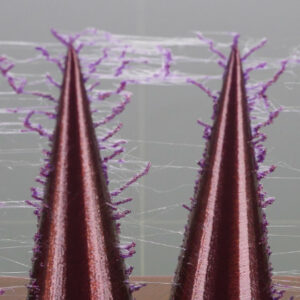
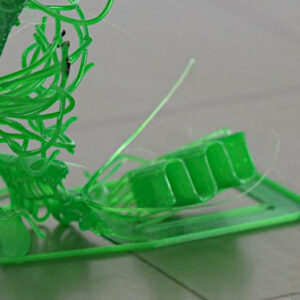
Stringing or oozing, also known as "hairy prints", is the name given for when small strings of filament are left on a printed model. This usually happens when the filament keeps…
This is by far the most common 3D printing problem, and probably the first one you may encounter. The first layer is the essential one because it is the base of the printed object.…
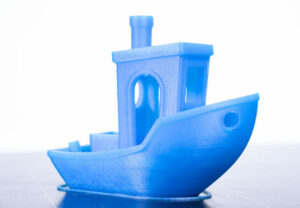
The 3DBenchy is a 3D model designed by CreativeTools specifically for testing and benchmarking 3D printers. And everyone wants to know, how to print a perfect Benchy. Ever since…
Layer shifting is a printing issue that causes the layers of the printed object to shift from their intended positions. It is usually associated with an abnormal movement of the…
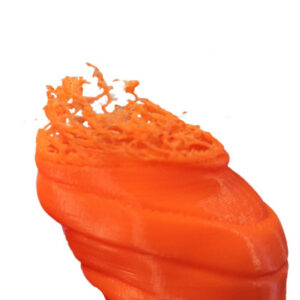
You can recognize under extrusion when there is material missing in your print’s layers. Printed objects with under extruded layers can be fragile and tend to break apart. There…
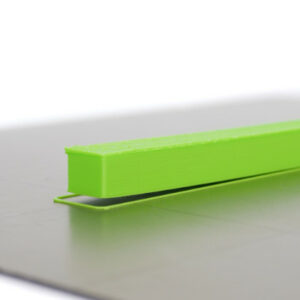
When printing large objects, you can sometimes run into an issue with the corners of the object being lifted from the bed – mostly when printing with high-temperature materials…
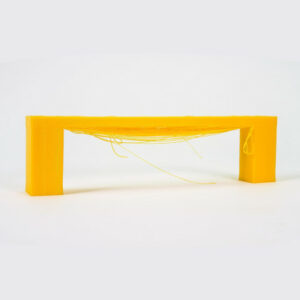
Bridging is a term for printing layers over thin air without the use of supports. It may sound like an impossible feat, but with our printers, it’s not that difficult. Keep in…
If the print does not appear on the printing platform, nor at the bottom of the resin tank, there are a couple of possible causes: Highly insufficient exposure times Old or separated…
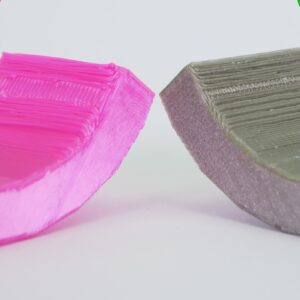
This refers to the de-lamination of the printed layers. It is mostly caused by an incorrect preset/(custom)profile with wrong temperatures and/or too much cooling from either the…
Generally speaking, it’s always the best option to rotate the object in such a way that the supports are not needed at all. However, if you need to print complex objects, you will…
A print coming from molten plastic one might assume that it is water-tight, but that is not always the case. How to make an object look good and what makes it watertight does not…
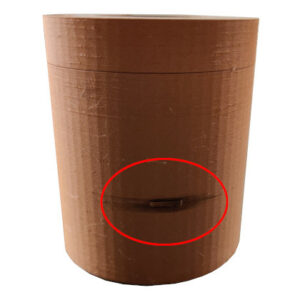
Ghosting can be typically recognized by several waves that follow after a sharp edge of a model. An example can be seen in the photograph of 3DBenchy at the marked spot. How to…
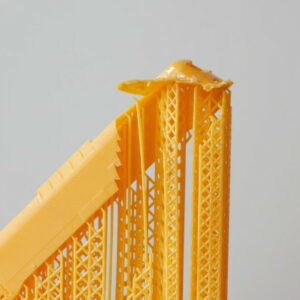
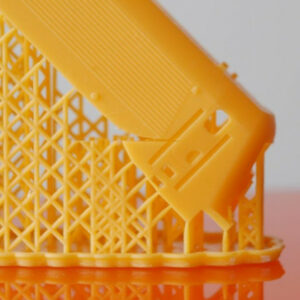
Supports are an important part of a 3D-printed object, especially when printing a model with a complex shape. If support material breaks, it is likely to cause a failure on the…
Broken supports (or missing parts of supports) are usually caused by incorrect settings in the PrusaSlicer. The supports are either too thin or the exposure time is set to a value…
Various problems with infill are not the worst kind of trouble you may come across, however, in some cases it can put the structural integrity of your prints at risk. The ideal…
Why is this happening? If the printed object detaches from its supports mid-print, it will fall into the resin tank, usually with the supports still attached to the printing platform.…
In case the first layer did not stick to the printing platform, it would remain stuck at the bottom of the tank. No matter how big or how small the stuck layer is, here is a quick…
A skewed/deformed print is usually caused by loose screws – either the large black knob at the top of the cantilever, the screw(s) on the cantilever itself or the resin tank screws. Solution Cantilever…
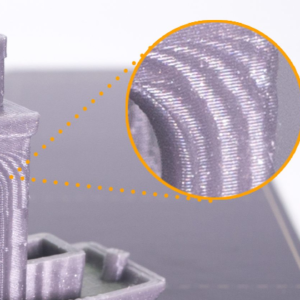
Even though SLA printers can achieve much better resolution than standard FFF/FDM 3D printers, layers on objects can be still visible if you look very closely. If you feel like…
The printing platform must be perfectly flat and degreased to ensure that the first prints are properly attached. If the pad or print itselfs separates from the printing platform,…
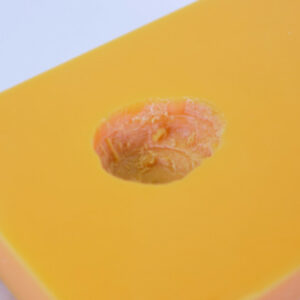
Large holes (defects) in printed objects are almost exclusively caused by dirt on the FEP foil or loose particles in the resin. Tiny pieces of debris on the bottom of the tank…
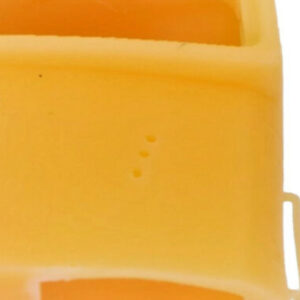
Bubbles or small scratches (also appearing like cracks) on the object are caused by small pieces of dirt or debris in the tank (vat) you are using. These small objects travel in…
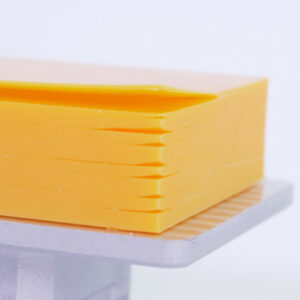
If you encounter de-lamination, separated layers, or missing layers, the cause is usually in a broken SL1/STL file. Another cause can be a faulty UV LED panel or dirt in the resin…
Most resins have a tendency to shrink by several micrometers after they are cured. These expansions and resulting forces can lead to layer warping and layer separation. However,…
The Original Prusa SL1 3D printer can produce objects with an incredible amount of detail – tiny wrinkles on cloth of a figure, texture of skin, thin railings on buildings, etc.…
When you finish building the INDX conversion kit, your CORE One+ becomes the CORE One+ INDX. You switch on the printer for the first time and run all the calibrations. They are…