AA

Featured products

    Popular categories

      Trending searches

        Articles

          Blog

            Products

              Categories

                Suggested searches

                  Searching…
                  No results
                  Something went wrong.
                  ↑↓ Select↵ OpenEsc Close search
                  • English
                  • Čeština
                  • Deutsch
                  • Español
                  • Français
                  • Italiano
                  • Polski
                  • 日本語
                  • Orders
                  • Address
                  • In-stock Alerts
                  • My Courses
                  • Subscription
                  • Edit Account
                  • 3D printers9+▾

                    3D printersnew

                    newPrusa CORE One L+Learn more
                    newPrusa CORE One+ (Gen 2)Learn more
                    newPrusa CORE One L+ INDX 8-ToolnewPrusa CORE One+ (Gen 2) INDX 8-ToolPrusa CORE One L+: Critical InfrastructureOriginal Prusa MK4SnewOriginal Prusa XL+Original Prusa XL+: Critical Infrastructure

                    Printer upgrades

                    newINDX Conversion KitsnewPrusa CORE One L to CORE One L+ upgradenewPrusa CORE One+ to Prusa CORE One+ (Gen 2)newPrusa XL to Prusa XL+ Upgrade
                    Prusa Reward ProgramLove your Prusa printer? Share your experience and earn $30 Prusa e-shop vouchers.
                    How to Choose a 3D Printer?We’ll walk you through the basics to find the exact machine for your space, budget, and ideas.
                    Free E-bookDownload a free e-book Basics of 3D Printing with Josef Prusa and make your first steps in 3D printing world
                    Original Prusa Printable PartsCollections of printable spare parts for Original Prusa 3D printers and upgrades.
                    Shipping informationRegularly updated info about the current manufacturing capacity and delivery times of our printers.
                    Custom 3D PrintingProfessional custom 3D printing from various materials according to your requirements.
                  • Materials▾

                    Filaments

                    PrusamentPLAPETGASA / ABSPC (Polycarbonate)PA (Nylon)FlexCompositesSpecialMaterials clearance sale

                    Resin

                    Prusament ResinResin Cleaner
                    Filament GuideCheck my Prusament Spool
                    Prusament.com
                  • Parts & Accessories▾

                    Accessories

                    EnclosuresNozzlesPrint SheetsEssential AccessoriesCameras & AddonsTools & CraftingAdhesives

                    Spare parts

                    Merchandise

                    Spare parts - All PrintersCORE OneMK4/S & MK3.9/SMK3/S/+XL
                    Merch
                  • For Business▾
                    Prusa Pro HT90Prusa Pro SLXPrusa Pro AFSPrusa Pro Medical OneOriginal Prusa XLOriginal Prusa XL: Critical Infrastructure
                    Prusa CORE One+Learn more
                    Prusa CORE One LLearn more
                    Prusa CORE One L: Critical Infrastructure Edition

                    3D Printing for

                    Manufacturing and R&DAutomotive IndustryHealthcareEducation and Academic ResearchArchitects and DesignersFilm IndustryCritical Infrastructure

                    3D Printing Stories

                    • How 3D printing started: About Rep-rap and open-source with Adrian Bowyer
                    • Teaching mathematics redefined with 3D printing at JKU Linz
                    • The story behind the LTT screwdriver
                    • Victoria Hand Project: Changing Prosthetic Care with 3D Printing
                    Official Prusa Resellers
                    Sustainability
                    Prusa Education
                    Contact and Inquiry
                    Custom 3D Printing
                    ISO Certified
                  • Software▾
                    PrusaSlicer

                    PrusaSlicerPrusaSlicer

                    PrusaSlicer is an open-source, feature-rich, frequently updated tool that contains everything you need to export the perfect print files for your 3D printer.

                    WindowsMacOSLinux
                    Prusa Connect

                    Prusa Connect

                    Prusa Connect is a cloud service enabling remote control and monitoring of your 3D printers, offering secure data handling, easy setup, and support for managing multiple printers from anywhere.

                    Log in to Connect
                    Prusa.app

                    Prusa.app

                    Control your printer/s remotely from anywhere using the Prusa Connect technology behind. Prusa.app brings a new level of Prusa printer experience to Android and iOS phones.

                    Try it now!
                    Drivers & FirmwareDownload the latest firmware and drivers for your 3D printer.
                    PrusaSlicer Support
                    Prusa Connect Support
                  • 3D Models▾
                    3D PrintersArt & DesignHobby & MakersHouseholdTabletop MiniaturesToys & GamesPrintables Store

                    Popular 3D models

                    • Strong garden hose holder
                    • Prusa Spool Bot
                    • Build Tray — Modular Organizer for Assembly, Disassembly and Maintenance
                    • Broom Holder
                    • Octagon Fabric
                    • Prusa CORE One ? (Mimic Skin)

                    Design Contests

                    • Réutilisation de la carte mère Framework Laptop 129/1/2026 – 9/30/2026
                    • 🏆 Défi du designer : Tours de magie !9/1/2026 – 9/22/2026
                    • Organisateurs de maquillage9/4/2026 – 9/20/2026
                  • Community▾

                    Upcoming Events

                    • 3D Printopia 20269/26/2026 – 9/27/2026 · Pennsylvania, United States · Prusa Team
                    • Maker Faire Bay Area9/25/2026 – 9/27/2026 · Kalifornie, United States · Prusa Team
                    • Hobby Messe10/2/2026 – 10/4/2026 · Sachsen, Germany · Prusa Team
                    • Mezinárodní strojírenský veletrh10/6/2026 – 10/9/2026 · Jihomoravský kraj, Czechia · Prusa Team

                    Prusa Forum

                    • LDC Screen Locked Up on Progress Screen during Print?
                    • Prusa slicer can't use multiple filaments with difference shrinkage rates?!
                    • Front Fan Wiring route
                    Prusa World MapPrusa World MapFind local 3D printing users and explore the community around you.
                  • Help▾
                    Guides & TutorialsPrusaSlicerPrusa ConnectMaterials

                    Printer Model

                    CORE One INDXCORE One LCORE One+CORE One

                    Hardware Troubleshooting

                    • Selftest failed (CORE One/+)
                    • Clogged nozzle (CORE One, CORE One L, XL, MK4/S, MK3.9/S)
                    • Adjusting belt tension (CORE One/+, CORE One INDX, CORE One L/+)
                    • Prusa Connect and PrusaLink explained

                    Drivers & Firmware

                    INDX familyCORE One familyMK4 familyXL familyMMU familyPRO family
                  • Courses▾

                    Become an expert in 3D printing

                    Prusa Academy offers online courses on various 3D printing related topics. Each course features:

                    • easy-to-read text with many pictures and short videos
                    • links for inspiration and further study
                    • quizzes for testing your knowledge along the way
                    • certificate of completion
                    Browse all coursesMy courses library
                    • 3D Modeling in Autodesk Fusion
                    • PrusaSlicer Masterclass – Beginner to Advanced
                    • Complete Guide to 3D Print Postprocessing, Painting, and Detailing
                    • Beginner's Guide to Blender for 3D Printing: Edit and Remix STLs
                  • Blog▾
                    • Prusament PLA ColorMix: Print 45 color shades using just five filament spools (and more)
                    • Back-to-School 2026 Deals Are Here!
                    • PrusaSlicer 3.0 Preview – Built for the Future of 3D Printing
                    E-Book: Basics of 3D Printing
                  • Company▾

                    About Prusa Research

                    We are the largest maker of 3D printers in Europe and the United States.

                    Founded as a one-man startup in 2012 by Josef Prusa, a Czech hobbyist, maker, and inventor. In just 15 years, we've grown into a company of more than 1,200 people. Every month, we design, build, and ship over 10,000 innovative and secure 3D printers from our headquarters in Prague, Czech Republic, and Delaware, USA, to users in more than 160 countries.

                    Watch a video and find out how Prusa Research was born and what we achieved within only 10 years!

                    About UsTimelineSustainabilityOpen-source
                    About Us
                    Contact Us
                    Logo and Photos
                    ISO Certified
                  1. Support
                  2. Original Prusa MK3.9
                  3. Material guide
                  4. Drying filament
                   

                  Contents

                  • Prevention
                  • Multi-Tool Printing
                  • How to recognize if the filament has gathered humidity
                  • Prusament spool types
                  • Drying methods

                  Blog

                  • Prusament PLA ColorMix: Print 45 color shades using just five filament spools (and more)
                  • Back-to-School 2026 Deals Are Here!
                  • PrusaSlicer 3.0 Preview – Built for the Future of 3D Printing

                  Newsletter

                  Signup and get our monthly squeeze on updates, blog, printables and much more.

                  By clicking, you agree to receive our newsletter.

                  This site is protected by reCAPTCHA Enterprise and the Google Privacy Policy and Terms of Service apply.

                  Strong garden hose holder
                  E-shop
                  • 3D Printers
                  • Printer Upgrades
                  • Filaments
                  • Accessories
                  • Prusa Merchandise

                  © Prusa Research a.s.

                  Printables
                  • 3D Models
                  • Store
                  • Clubs
                  • 3D Design Contests
                  • Brands
                  Community
                  • World Map
                  • Forum
                  • User Groups
                  • Events
                  Help
                  • Prusa Help
                  • Prusa Academy
                  • 3D Printing Calculators
                  Software
                  • PrusaSlicer
                  • Prusa.app
                  • Prusa Connect
                  • Drivers and Software
                  Company
                  • About Us
                  • Blog
                  • Official Prusa Resellers
                  • Contact Us
                  • Certified for ISO 9001, ISO 14001, ISO 45001
                  • General Terms and Conditions
                  • General Terms and Conditions of Use of the PRUSA Websites
                  • Privacy Policy
                  • Information about cookies
                  • Customer Complaints Policy
                  • Status Page
                  • Do Not Sell or Share My Personal Information
                  • Supplemental Statements
                  • General Terms and Conditions
                  • General Terms and Conditions of Use of the PRUSA Websites
                  • Privacy Policy
                  • Information about cookies
                  • Customer Complaints Policy
                  • Status Page
                  • Do Not Sell or Share My Personal Information
                  • Supplemental Statements

                  © Prusa Research a.s.

                  JOSEF PRUSA®, PRUSA RESEARCH®, PRUSA POLYMERS®, PRUSA ORANGE®, PRUSA 3D ® AND PRUSAMENT® are registered trademarks of Prusa Development a.s. used by Prusa Research a.s. under licence from Prusa Development a.s.

                  Drying filament

                  Relevant for

                  MK4 family
                  XL family
                  MMU family
                  PRO family
                  MINI family
                  +
                  26 comments
                  Article is also available in following languages
                  English
                  Čeština
                  Polski
                  Deutsch
                  Français
                  Español
                  Italiano
                  日本語

                  The materials used for FFF 3D printing are mostly hygroscopic. This means that they readily attract water molecules from the environment they are in. When used for printing, a material that has gathered humidity might not behave as expected.

                  Prevention

                  Some filaments are more hygroscopic than others. When using a new material, make sure to research its properties and the best way to store it. It is best to avoid having to dry the filament if possible.

                  It is best to store your filaments in a closed space or box, with some desiccant material in it. If you have limited availability for this type of storage, prioritize storing filaments that are more hygroscopic. PLA, for example, doesn't change properties too much by uptaking humidity, whereas Polyamide is affected quite significantly.

                  To prevent any issues with the highly hygroscopic materials (polyamide, polypropylene, PVA, BVOH, ...), it is recommended to either ensure they are stored in a dry environment or dry them before every print.

                  You can purchase a box with the specific purpose of keeping the filament dry (such as Prusa USS Drybox), or make your own.

                  Another popular solution to keep your filament dry is using vacuum bags for storage. There are bags specific for filaments, but you can use any that will fit a filament inside. Keep a desiccant in the bag when storing the filament.

                  Multi-Tool Printing

                  In printers like the Original Prusa XL, where filament is loaded directly into toolheads, any humidity in the filament is critical. When printing with multiple toolheads, the unused tools remain heated (the idle temperature is set to 70°C by default). If the filament is wet, moisture is released into the tool, causing stringing in the toolhead. In such cases, even PLA can absorb enough moisture to create printing issues. This makes the XL more susceptible to filament moisture compared to single-tool printers, therefore we recommend drying the filament before printing on the Original Prusa XL.

                  How to recognize if the filament has gathered humidity

                  In case a material is affected by humidity, the general first signal will be a poor quality of the model surface.

                  Some filaments are naturally more stringy than others. Make sure to compare different results from your prints, and check our Stringing and oozing guide.

                  In some cases, the high content of water in the filament can cause low layer adhesion, blobs on the prints, and bubbling and smoke during extrusion.

                  Polyamide, PVA, and TPU (Flex) are filaments more often in need of drying than more popular filaments like PLA.

                  Prusament spool types

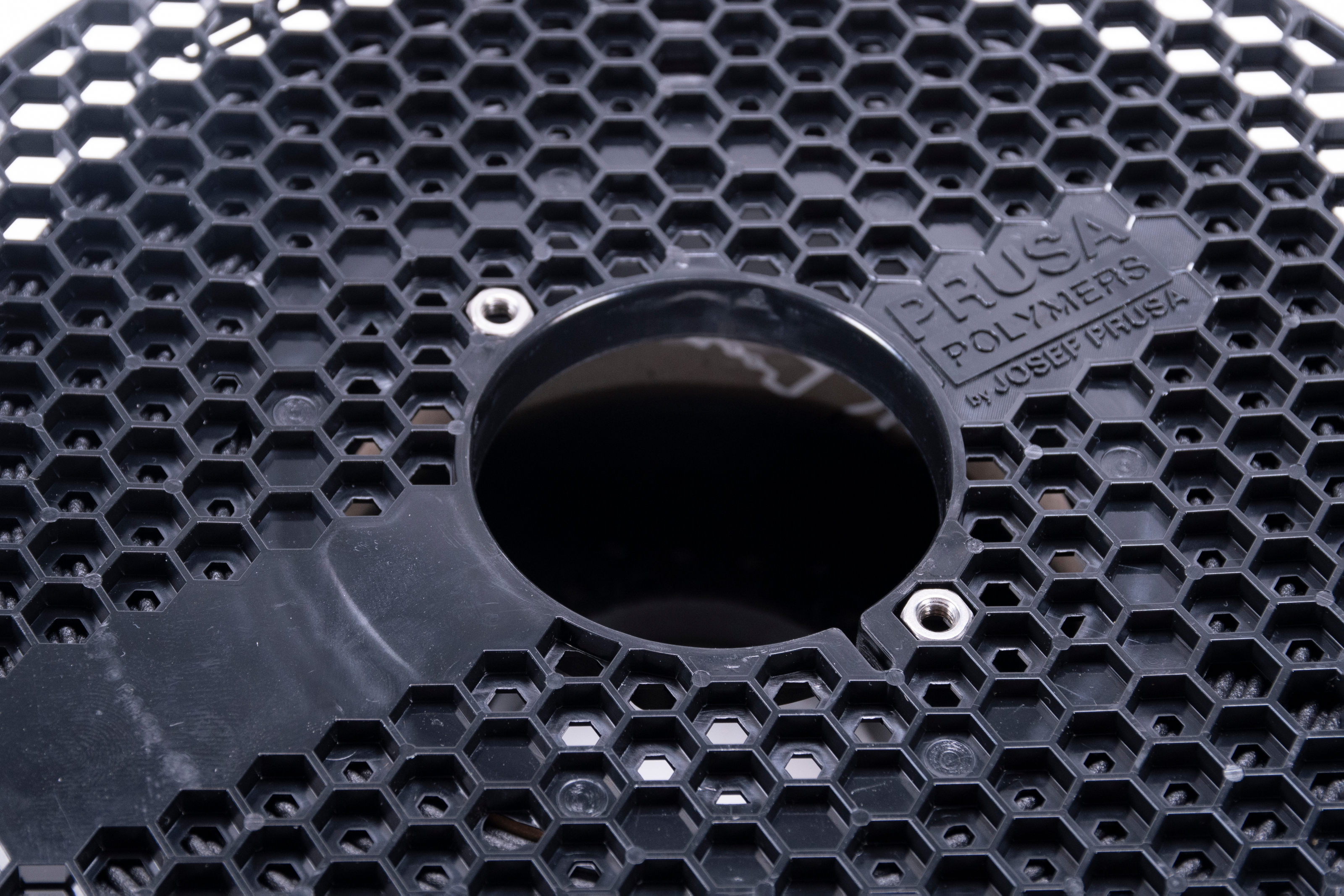
                  Prusament filaments are wound on a redesigned spool that introduces several improvements for an even better printing experience, starting in October 2025. The new spool features a simple locking mechanism that makes disassembly quick and easy, allowing effortless refills. It also stays secure during filament drying, even at higher temperatures.

                  For standard (low-temperature) filaments, we use a black spool, which resists drying temperatures as high as 90 °C. And for high-temperature filaments (Prusament PEI 1010), we use a grey spool, which is usable for temperatures reaching 150 °C. The new spools don't require any extra preparations before drying.

                  However, there is still a significant number of old spools on the market, which need extra preparation before drying filament.

                  Prusament black spool (old version)

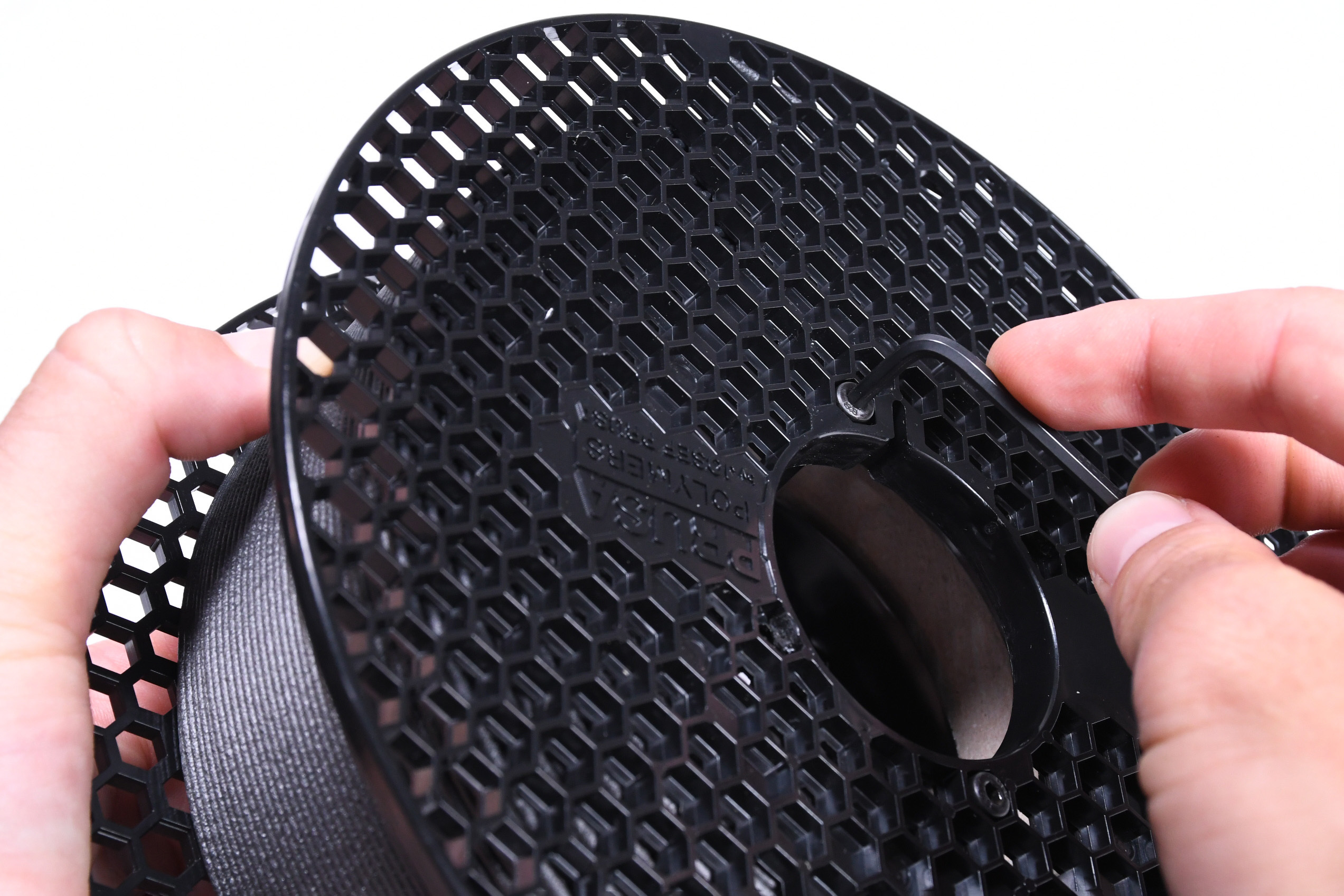
                  The black plastic sides of Prusament spools are firmly pressed into the cardboard cylinder. The plastic sides expand with rising temperature and cause the expansion of the cardboard center as well. When the temperature decreases, plastic shrinks back to its original shape, but the cardboard stays expanded, which causes loosen spool. The spools can be heated up safely up to 45 ºC without this happening.

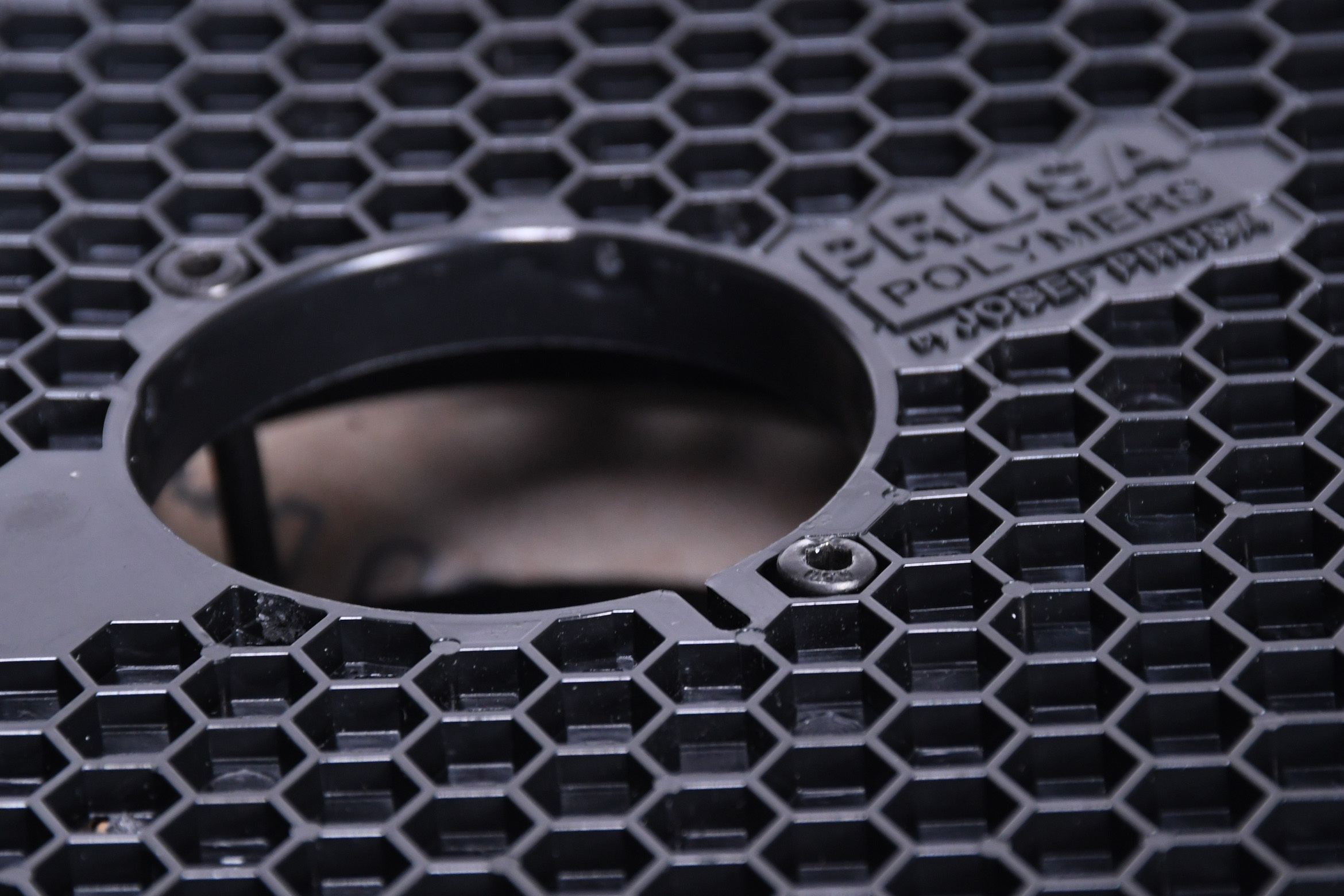
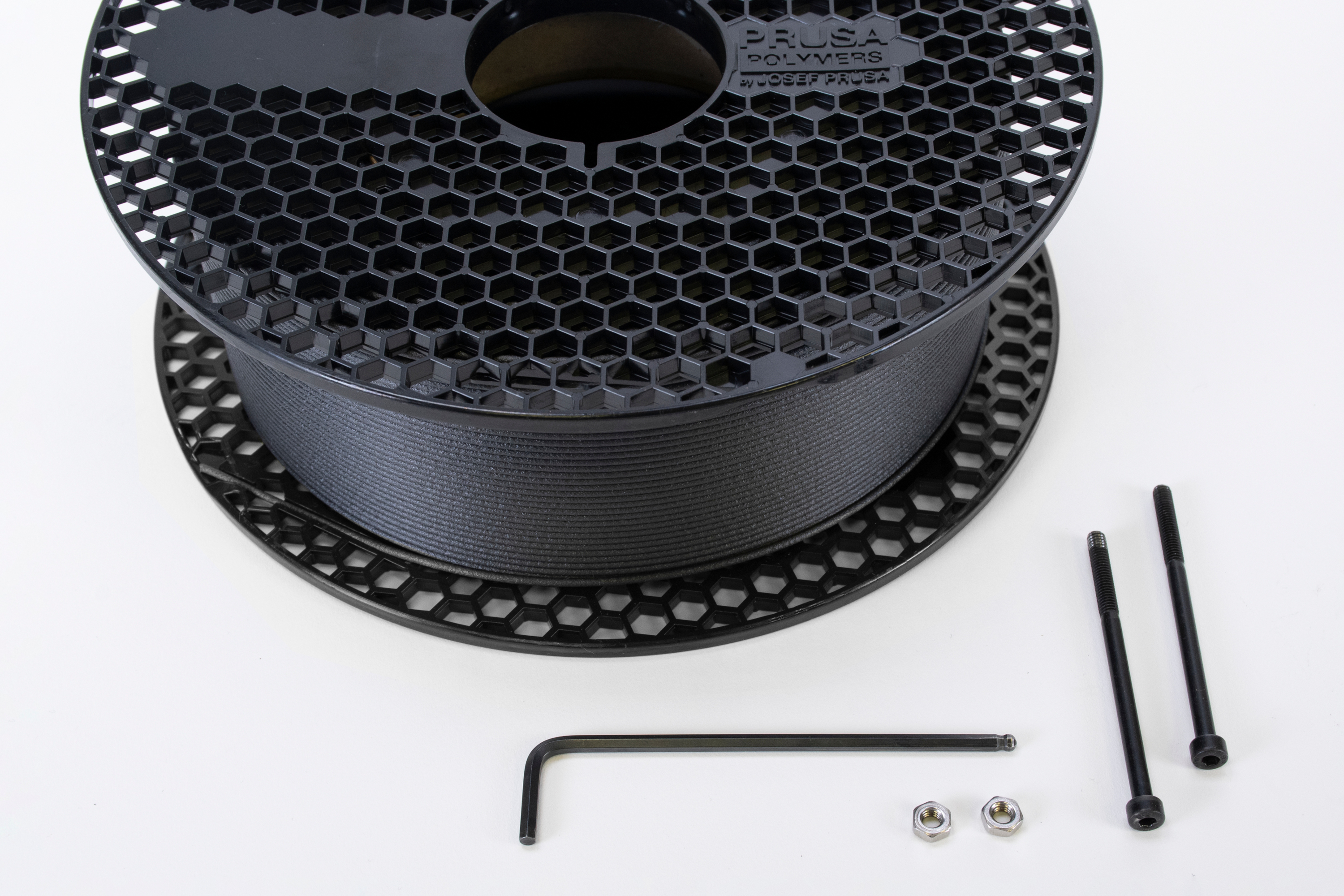
                  Alternatively, it is possible to add a screw holding the two sides of the plastic together. The screw needs to have a thread of at least 65 mm. In the pictures, we use an M4x65 screw, tightened by a 3.5mm Allen key.

                  After heating the spool to above 45 ºC, the screw must hold the spool until the end of its use, or else the spool will fall apart.
                  Prusament Grey spool (old version)

                  The old Prusament spools with grey plastic sides are glued to the cardboard center to prevent falling apart. The glue added can withstand up to 90 ºC. So there is no need to add the screw to dry this spool if this temperature is not exceeded.

                  The old version of PA11CF filament uses the grey Prusament spools. It is recommended to keep this filament in a dry box between each use, even if the filament will be used soon. In case that is not possible, dry the filament before each use.

                  Drying methods

                  Temperatures

                  Once you are sure that the spool will not fall apart, the following temperatures and times are recommended for the Prusament materials. It is important not to exceed these temperatures while drying the filament, or the filament will soften and stick together.

                  Also, it is important to stick to the recommended drying times to prevent overdrying.

                  MaterialTemperatureTime
                  PLA/rPLA45 ºC6 hours
                  Woodfill45 °C6 hours
                  PVB45 ºC8 hours
                  PETG (all versions)55 ºC6 hours
                  TPU60 °C4-6 hours
                  PP Carbon Fiber/Glass Fiber70 °C2-4 hours
                  ASA80 ºC4 hours
                  PC Blend85 ºC5 hours
                  PC Blend Carbon Fiber90 ºC4 hours
                  PC Space Grade90 °C4-6 hours
                  PA11 Carbon Fiber90 ºC6 hours
                  PEI150 °C8 hours

                  Filament dryer

                  There are specialized boxes that will not only keep filaments dry but also actively remove the moisture from filaments. Usually, you are also able to keep the filament in the box while printing.

                  Make sure to check the specifications of the box you intend to use to make sure that it matches the drying temperature of your filament.

                  To maintain low humidity during printing, we recommend using the Prusa Pro Filament Drybox or Prusa USS Drybox.

                  Oven

                  Since most people have an oven at home, this seems the easiest way to dry filament. However, some things need to be noted for filament drying in a conventional oven.

                  Home ovens don't have a very precise temperature measurement. The fluctuations that do not affect your food might damage your filament, especially low-temperature ones like PLA. If using an oven, make sure to have an external thermometer to correct the temperature if necessary.

                  Another issue is that a lot of home ovens cannot be set at a temperature low enough to dry the filaments without damaging them. Even if left for less time than recommended, high temperatures will damage the filament.

                  Professional drying ovens

                  If you need to dry high-performance or highly hygroscopic materials (such as PEI, PEEK, or carbon-filled nylons) with precise and stable temperature control, we offer laboratory-grade drying ovens.

                  We offer the Memmert UF-series ovens, which feature accurate temperature regulation, adjustable fan speed, and exhaust flap settings suitable for advanced filament drying.

                  For more information about setup and drying workflow, see Drying filament in Memmert UF-series universal oven.

                  Food dehydrator

                  A different method of drying is adapting a food dehydrator to fit a filament spool inside. The adaptation is usually achieved by taking off the trays between the layers and placing the filaments inside. These dehydrators usually have only low temperatures, so check the drying temperature of your filament before purchasing one.

                  After drying, make sure to store the filament properly.
                  Was this article helpful?
                  This action is available only to registered users. Please log-in.

                  Topics

                  • Using the printer
                    • Material guide
                      • ASA
                      • Flexible materials
                      • ABS
                      • PETG
                      • PLA
                      • Polycarbonate (PC)
                      • Composite materials (with metal or wood particles)
                      • CPE
                      • Water soluble (BVOH/PVA)
                      • HIPS
                      • Polypropylene (PP)
                      • NGEN
                      • Polyamide (Nylon)
                      • Composite materials (filled with carbon, kevlar or glass)
                      • PVB
                      • LW PLA
                      • Drying filament
                      • How to use Prusament refill 1kg
                      • PEI (Ultem)
                      • HueForge filament transparency values and HexCodes
                      • PEEK-CF (Polyetheretherketone)
                      • PEKK-CF (Polyetherketoneketone)
                      • PPS (Polyphenylene sulfide)
                      • PSU (Polysulfone)
                      • PPSU (Polyphenylsulfone)
                      • How to print with PEI 1010
                      • Prusament TPU 95A material guide
                      • Prusament PETG Ultraglow troubleshooting
                      • Prusament Woodfill
                      • PETG V0
                      • PETG Magnetite 40%
                      • PETG Tungsten
                    • 3D models
                    • Slicing
                    • Printer maintenance
                    • Prusa Connect & PrusaLink

                  18 comments

                  Log in  to post a comment
                  Makubuya Festo
                  •
                  Kindly update info on the new spools with NFC
                  Reply
                  Iustin Pop
                  •
                  The information here is out of date for the new NFC-enabled spools. From the blog post that introduced them, quote:

                  "We replaced the original paper core with a plastic one equipped with a locking mechanism, and we manufacture the whole spools from recycled polycarbonate. This ensures high reliability at temperatures up to 100 °C. And the High-Temp spools we use for PEI resist up to 150 °C, even with the OpenPrintTag inside."

                  Would be good to update the article!
                  Reply
                  Preston L. Bannister
                  •
                  First, there is a lot of chemical energy in a roll of filament, so an oven with wide temperature swings might risk a rather dramatic fire (i.e. chance of burning down your house!). Best to put an accurate thermometer in oven, and check the temperature. Also watch carefully, at least the first time you do this.

                  That said, I have a slightly-fancy countertop convection oven (Breville) that seems to have very well-regulated temperature. Drying PLA at 130°F for an hour (the fan moving air in the oven) seems to do the trick for me. (Not done anything empirical.) With PLA ~60-65°C (140-149°F) is the glass transition temperature, so we are well below.

                  (CNC Kitchen did a video on this, a while back.)
                  Reply
                  bbum
                  •
                  The drying times are way too long. No harm done but wasted time and energy.

                  TPU? 90 minutes, typically.
                  PLA/PETG? 60-90 minutes.

                  Now, obviously, the relative humidity in the surrounding environment will be a major factor. Your drying times might be longer. (Also funny to note that most sites say TPU requires 8 hours @ 50-60).
                  Reply
                  Jan Novák
                  •
                  Thank you for your suggestion. Drying depends on many factors, including the number of filament layers on the spool, air permeability to the bottom layers, and others. The listed values are based on our long-term testing.
                  Reply
                  mblunt
                  •
                  This probably needs to be updated due to the new spool design and NFC tags...
                  Reply