Prusa
  • ショップ
    • 最新製品
    カテゴリー別
    • 3Dプリンター新着
    • 3Dプリンターアップグレード新着
    • 材料
    • アクセサリー
    • スペアパーツ
    • コース
    • グッズ
    • 見積もりを取得
    クイックリンク
    • 配送と配達
    • 返品と返金
    • 支払いと融資
    • 保証
    • VATと関税
    • よくある質問

    0 点の商品がカートに入っています点の商品がカートに入っています

    カートは空です

    カートを見る3Dプリンターを購入

    マイプロフィール

    ログイン すると注文や保存した商品を確認できます

    マイプロフィール

    ログイン中:

    • 注文
    • ログアウト
  • 3Dプリント
    • 3Dプリントを探る
    初心者向け
    • 3Dプリントの基礎
    • FDM印刷の仕組み
    • 初めてのプリンターを購入する
    • 3Dモデルカタログ
    用途別
    • ラピッドプロトタイピング
    • 製造
    • エンジニアリング
    • 研究
    • アートとデザイン
    さらに深く
    • 材料ガイド
    • コース
    • ウェビナー
    • 導入事例
    • カスタム3Dプリンティング
  • 3Dプリンター
    • すべての3Dプリンター
    用途
    • 自宅またはガレージ愛好家、改造愛好家、ホームプリンティング
    • ビジネス小規模チーム向けの社内生産
    • エンタープライズフリート、セキュリティ、大規模生産
    • どのPrusaが私に適していますか
    ショップと閲覧
    • CORE One+新着
    • CORE One+ INDX新着
    • CORE One L+新着
    • CORE One L+ INDX新着
    • XL+新着
    • MK4S
    • Prusa Pro HT90
    • Prusa Pro AFS
    • Prusa Pro SLX
    プリンターからさらに
    • 部品とアップグレード新着
    • Spare parts
    • 重要インフラ
    • 導入事例
    • シグネチャーオーク
    • キット
  • 材料
    • すべての材料
    用途別
    • 日常とデザイン
    • 機能工学
    • 複合材料
    • プロフェッショナル向け特殊材料
    • SLAレジン
    Prusament
    • PLA
    • PETG
    • ASA
    • PC
    • PA11
    • Flex
    • TPU
    材料からさらに
    • 材料ガイド
    • 自社製材料
    • サステナビリティ
    • ストアで注文
  • ソフトウェア
    • すべてのソフトウェア
    印刷の準備
    • PrusaSlicer 3.0新着
    印刷と監視
    • Prusa Connect
    • EasyPrint
    • iOS & Androidアプリ
    • Prusaファーム
    始める
    • ダウンロードとインストール
    • ナレッジベース
    その他のソフトウェア
    • 3Dモデルカタログ
  • サポート
    • サポートを探す
    回答を探す
    • ナレッジベース
    • トラブルシューティング
    • コース
    • ウェビナー
    ヘルプ
    • お問い合わせ
    • ライブチャット
    • 配送と配達
    • 保証
    • 返品と返金
    • サービスとスペアパーツ
    • サービスと修理
    コミュニティ
    • フォーラム
    • Reddit
    • Printables
  • トラストセンター
    • トラストセンター概要
    トピック別
    • GDPR
    • 証明書
    • セキュリティ
    • コンプライアンス
    コミットメント
    • サステナビリティレポート
    お問い合わせ
    • セキュリティチームに連絡
  • 会社
    • Prusaについて
    私たちについて
    • 私たちのストーリー
    • プリンターの製造方法
    • オープンソース
    • ブランド&メディアキット
    ニュース
    • ブログ
    • ニュースルーム
    • イベント
    信頼とパートナー
    • サステナビリティ
    • 再販業者と販売代理店
    • アフィリエイトプログラム
    • お問い合わせ
    • English
    • Čeština
    • Deutsch
    • Español
    • Français
    • Italiano
    • Polski
    • 日本語
  • ログイン中:

    • 注文
    • 住所
    • 在庫アラート
    • マイコース
    • サブスクリプション
    • アカウントを編集
    • ログアウト

ログイン すると注文や保存した商品を確認できます

ログイン中:
  • 注文
  • 住所
  • 在庫アラート
  • マイコース
  • サブスクリプション
  • アカウントを編集
  • English
  • Čeština
  • Deutsch
  • Español
  • Français
  • Italiano
  • Polski
  • 日本語
ショップ

0 点の商品がカートに入っています点の商品がカートに入っています

カートは空です

カートを見る3Dプリンターを購入

マイプロフィール

ログイン すると注文や保存した商品を確認できます

マイプロフィール

ログイン中:

  • 注文
  • ログアウト
ショップ
  • 最新製品
カテゴリー別
  • 3Dプリンター新着
  • 3Dプリンターアップグレード新着
  • 材料
  • アクセサリー
  • スペアパーツ
  • コース
  • グッズ
  • 見積もりを取得
クイックリンク
  • 配送と配達
  • 返品と返金
  • 支払いと融資
  • 保証
  • VATと関税
  • よくある質問

おすすめ製品

    人気のカテゴリー

      急上昇ワード

        記事

          ブログ

            製品

              カテゴリー

                検索候補

                  検索中…
                  結果がありません
                  エラーが発生しました。
                  ↑↓ 選択↵ 開くEsc 検索を閉じる
                  1. サポート
                  2. プリンターの機能
                  3. Filament sensor MK3 (non-S)
                   

                  内容

                  • Running out of filament
                  • False sensor readings and debugging

                  ブログ

                  • Prusament PLA ColorMix:わずか5巻のフィラメントで45色以上をプリント
                  • PrusaSlicer 3.0プレビュー版 — 3Dプリントの未来を見据えた仕様
                  • より高品質なプリントを、もっと簡単に:Prusa XL+、CORE One L+、CORE One+(Gen 2)― 大規模製品アップグレード

                  ニュースレター

                  ご登録いただくと、毎月 新しいファームウェア、PrusaSlicerの新バージョン、3Dプリントプロジェクトの一般的なヒントなど、役立つ情報をお届けします。

                  クリックして、ニュースレターを受け取る。

                  このサイトはreCAPTCHA Enterpriseによって保護されており、Googleのプライバシーポリシーと利用規約が適用されます。

                  Heavy Duty Keyboard Holder (No Supports)
                  E-shop
                  • 3Dプリンター
                  • プリンターのアップグレード
                  • フィラメント
                  • アクセサリー
                  • Prusa 商品
                  Prusa

                  © Prusa Research a.s.

                  Printables
                  • 3Dモデル
                  • Store
                  • Clubs
                  • 3Dデザインコンテスト
                  • Brands
                  コミュニティ
                  • ワールドマップ
                  • フォーラム
                  • ユーザーグループ
                  • イベント
                  ヘルプ
                  • Prusa ヘルプ
                  • Prusa アカデミー
                  • 3Dプリンティング計算機
                  ソフトウェア
                  • PrusaSlicer
                  • Prusa.app
                  • Prusa Connect
                  • ドライバーとソフトウェア
                  会社概要
                  • 私たちについて
                  • Blog
                  • プルサ正規販売代理店
                  • お問い合わせ
                  • ISO 9001・ISO 14001・ISO 45001 認証取得済み
                  • 一般利用規約
                  • PRUSAウェブサイト利用のための一般利用規約
                  • プライバシーポリシー
                  • クッキーに関する情報
                  • お客様の苦情対応に関する方針
                  • Webサイトのステータスページ
                  • Cookie 設定
                  Prusa
                  • 一般利用規約
                  • PRUSAウェブサイト利用のための一般利用規約
                  • プライバシーポリシー
                  • クッキーに関する情報
                  • お客様の苦情対応に関する方針
                  • Webサイトのステータスページ
                  • Cookie 設定

                  © Prusa Research a.s.

                  JOSEF PRUSA®、PRUSA RESEARCH®、PRUSA POLYMERS®、PRUSA ORANGE®、PRUSA 3D ® および PRUSAMENT® は、Prusa Development a.s. の登録商標であり、Prusa Research a.s. が Prusa Development a.s. からのライセンスに基づき使用しています。

                  Filament sensor MK3 (non-S)

                  関連するもの

                  MK2.5
                  MK3
                  2 コメント
                  記事 他の言語でもご覧になれます。
                  English
                  Čeština
                  Polski
                  Deutsch
                  Français
                  Español
                  Italiano
                  日本語

                  The optical filament sensor detects the presence of a filament and also its movement. Make sure you are running the latest firmware since new versions offer a higher-frequency sensing algorithm and improved reliability. 

                  If you want to test your filament sensor, visit MK3 safety features - how to test them.

                  Running out of filament

                  Running out of filament will no longer cause a print failure. If you run out of filament, the printer will automatically pause the print, unload the remaining few centimeters of the material from the heatbreak, and move the X-carriage away from the print. You will be prompted to replace the spool and insert a new filament.

                  The printer will guide you on how to resume printing safely: 

                  1. "Please press the knob to unload the filament" = Press the knob to unload the remaining few centimeters of the filament.
                  2. "Repeat unloading filament?  [] = If everything went well, press [Yes]. If not, then press [No]. The printer will lock the x-axis motor and will allow you to open the extruder idler to clear the remains of the filament manually.
                    1. To open the extruder idler, simply undo STEP 16 in the E-axis assembly. 
                    2. Then, you can use the bundled pliers to remove the filament remains. If some of it got stuck in the PTFE tube, simply push it out with a new filament. 
                    3. Close the extruder idler as described in STEP 16, and you will be able to continue. 
                  3. "Insert filament and press the knob" = Make sure to insert the same type of filament, cut the tip of the filament properly (check out the photo below for the reference), insert the filament and press the knob. 
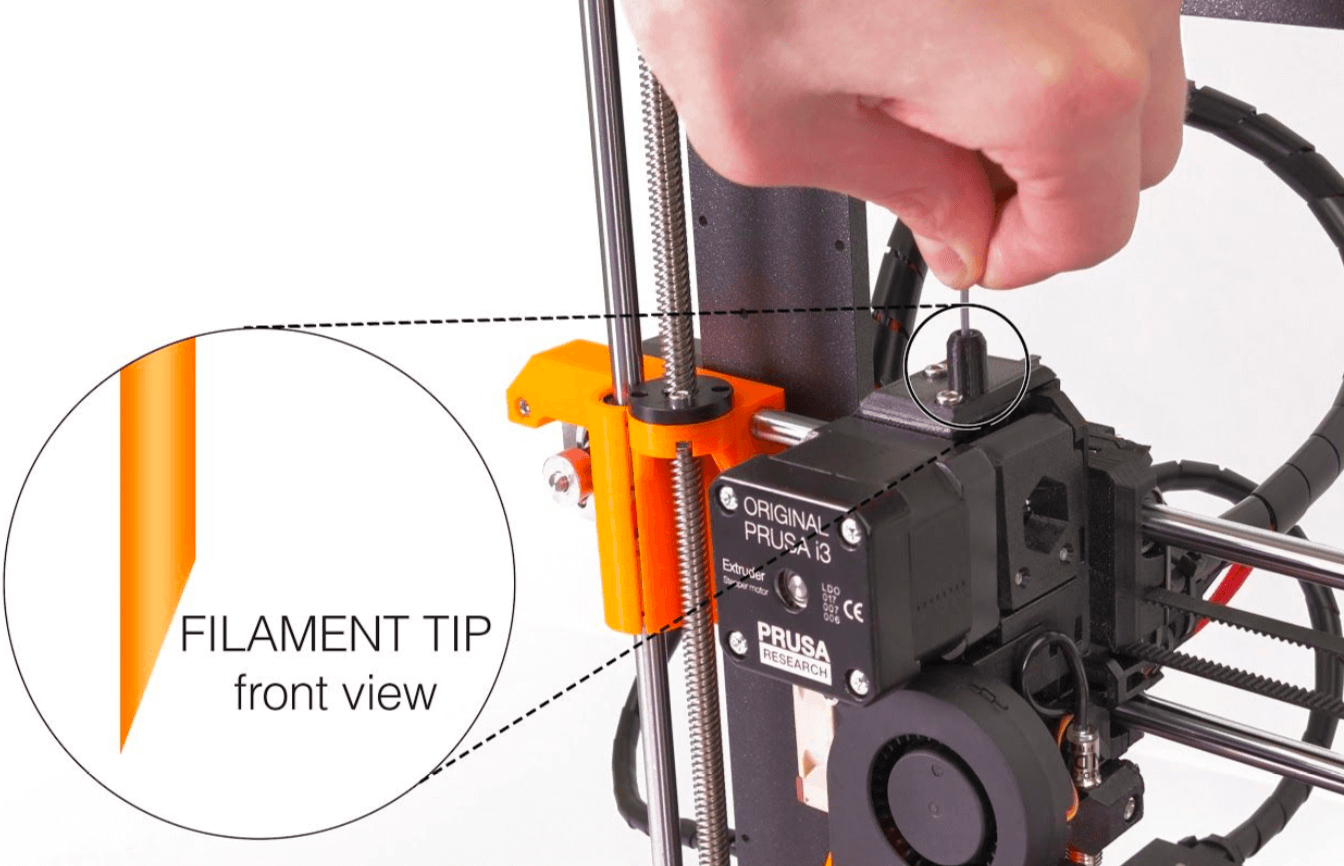
                  4. "Changed correctly?" [Yes/Filament not loaded/Color not clear] = If everything went fine and the new filament is coming out nicely (and has the right color), simply press [Yes]. If you think that the filament was not loaded properly, press [Filament not loaded], which will push through the same amount of filament as before. If the color is not clear, then press [Color not clear], this way it will push through only a bit of filament.

                  False sensor readings and debugging 

                  There are a couple of common causes for false sensor readings. You can avoid most of them by following these two rules: 

                  • Keep the surroundings of the filament sensor clean
                  • Avoid "extreme" light conditions near the printer

                  Sensor info 

                  A sensor info screen can be accessed in LCD Menu -> Support -> Sensor Info. 

                  Fil. sensor. The value can be 0 or 1, indicating if the filament is inserted (1), or not (0). 

                  B (brightness)

                  The sensor can be thought of as a camera.
                  Typically, there is a sharp change in brightness
                  when inserting or removing filament. 

                  Xd

                  Motion in the horizontal direction.
                  Detects motion not perpendicular to the print head.
                  Typically, there should be no Xd motion
                  or close to none. 

                  S (shutter)

                  The sensor can be thought of as a camera.
                  Depending on the brightness, the shutter
                  value might change. 

                  Yd

                  Motion in the vertical direction.
                  Changes to a positive value when filament goes
                  down, and lower or negative value vice versa. 

                  If all values are consistently 0, this indicates a malfunction on the sensor, as in not being connected or not communicating with the printer. 

                  Proper setup & Clean surroundings 

                  1. Make sure that the filament sensor is inserted correctly and the connectors are firmly attached.
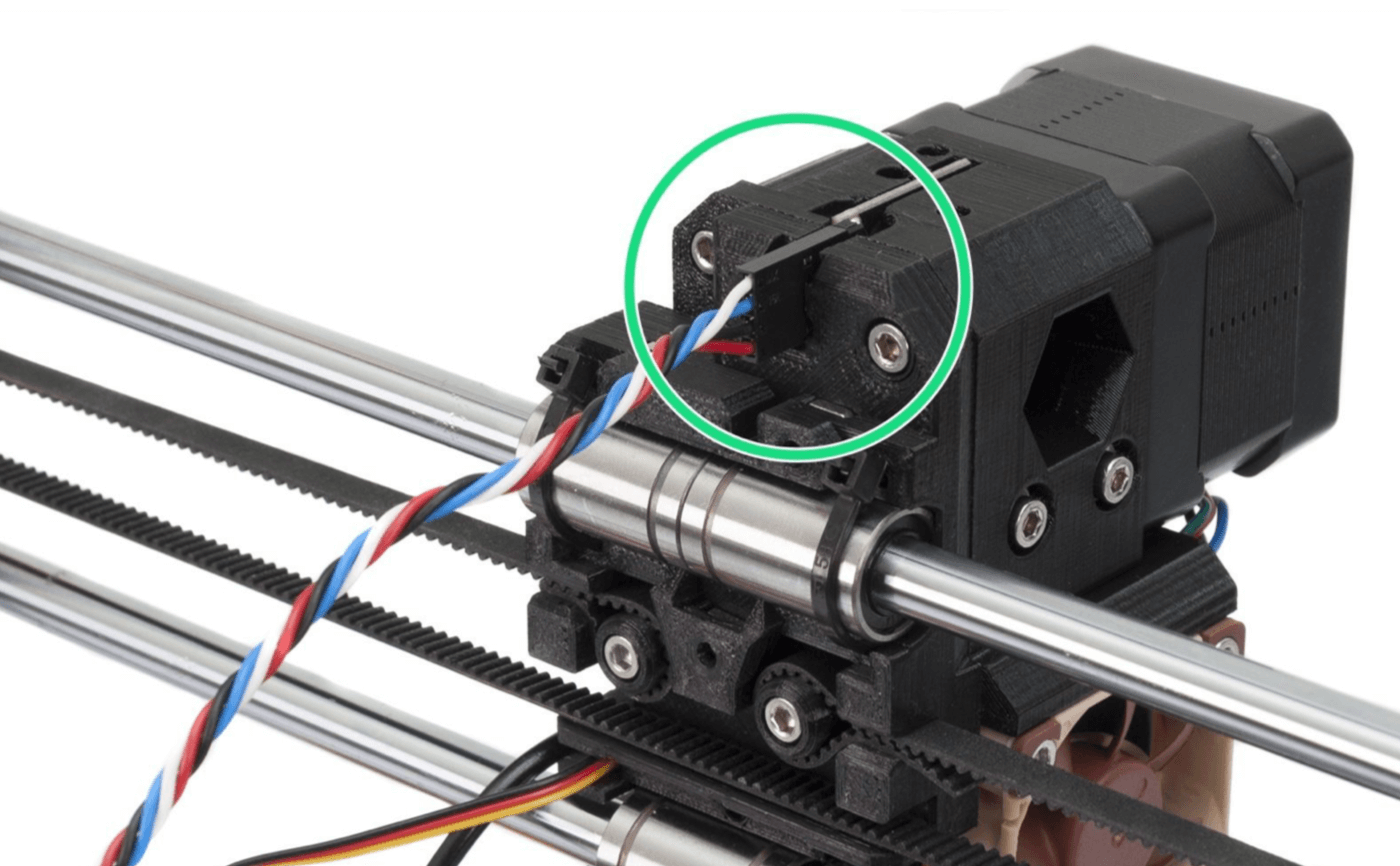
                  2. Make sure that there is no dust on and around the sensor. If you believe that there might be some, you can clean it using compressed air. There is a hole in the idler door precisely for this purpose. 
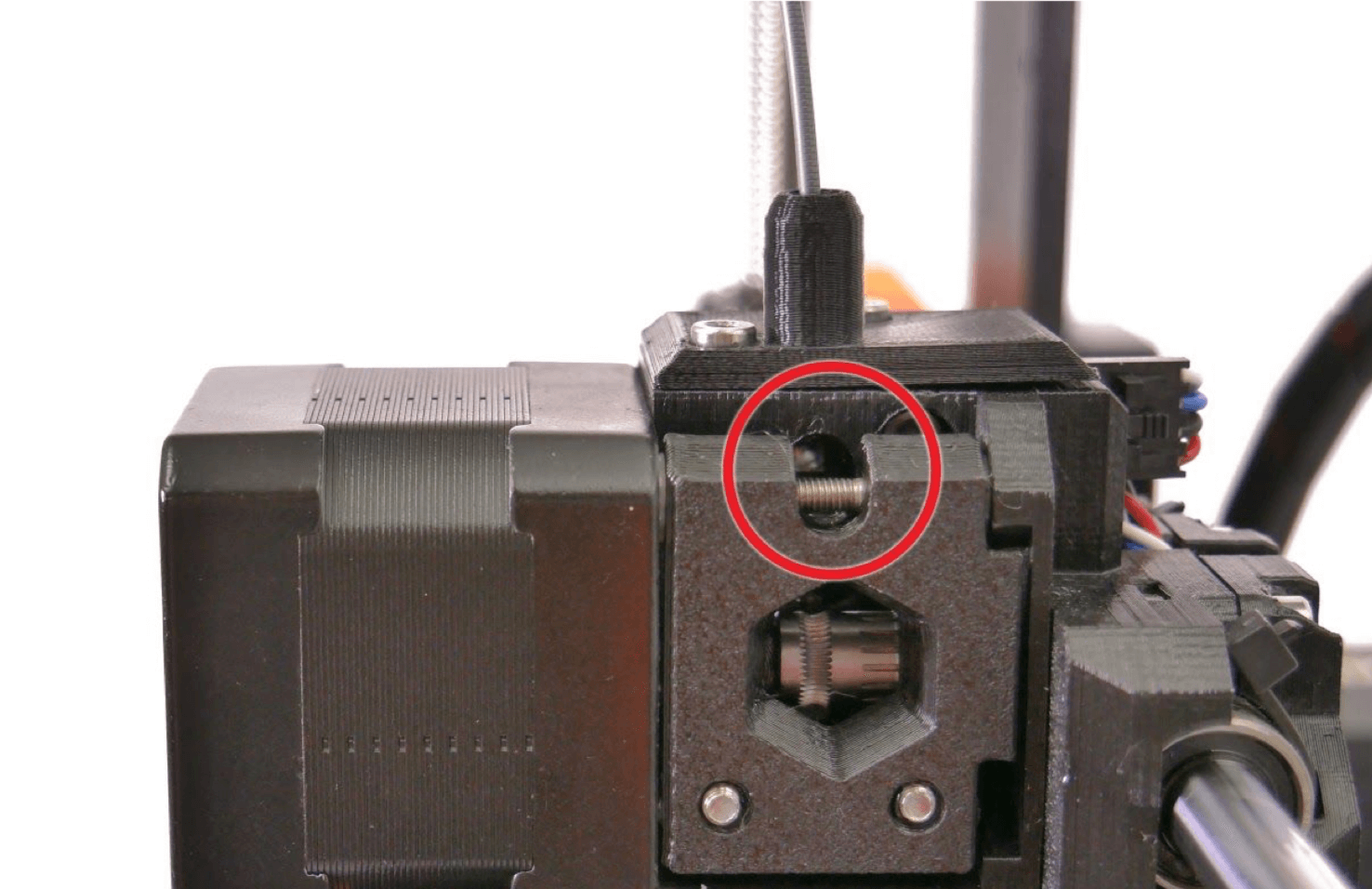
                  3. When you print the printable parts yourself, make sure that the extruder parts are printed in BLACK. The filament sensor is calibrated to operate in a black-colored environment only. Otherwise, it might be giving false readings.

                  Extreme light conditions 

                  If you’re printing in extreme light conditions (e.g., direct sunlight, extreme LED lighting) you might also encounter some false alarms. If that happens, please consider turning the filament sensor off for that specific print in LCD Menu - Settings - Fil. sensor [on/ off].

                  We would also strongly suggest finding a different placement of the printer or changing the surrounding lighting conditions

                  Exotic filaments

                  Some translucent filaments cast more light on the sensor than others, which can result in weird behavior. Certain colors like ivory, matte white, or lime green can also cause false alarms. If you’re printing with any of these filaments and you’re getting a lot of false alarms, consider turning the sensor off in LCD Menu - Settings - Fil. sensor [on/off].

                  この記事は役に立ちましたか?
                  この操作は登録ユーザーのみが利用できます。ログインしてください。

                  1 コメント

                  ログイン してコメントを投稿する
                  JD
                  •
                  We have around 20 Mk3 printers here at my university where it's my job to keep them running smoothly. Lately a few printzers started having problems with detecting filament, or falsely detecting filament. What temporarily fixed it for me was moving the idler cap just a little bit upwards. But as soon as it slips back into its place, the problems reemerge. Is there a known fix for this?
                  Reply
                  Alessandro Pantaleo
                  •

                  Hello, thank you for the comment, and sorry for the late response. If you referred to this cover, though not typical, it's possible that we might need to have it not over-tightened, although even 'over-tightening' the cover isn't necessarily causing an issue. Could it be that, in this case, since an MK3 without S or + is relatively not that new, there still was some dust or residue around the sensor, and that was the root cause of the issue? That could have happened and could explain the aspect in the description. Apart from this aspect, and the others in this guide, I wouldn't have another cause in mind based on the description. 

                  In general, for a specific troubleshooting case, though, I'd recommend checking it with our Customer Support, we can check the situation in more detail with some pictures that would help us find a solution! 

                  Reply

                  トピックス

                  • あなたのプリンターについて
                    • プリンターの機能
                      • ハードウェアセットアップ (MK2.5/S & MK3/S/+)
                      • スチールシートプロファイル
                      • 衝突検知
                      • Filament sensor MK3 (non-S)
                      • 柔軟性のあるスチールシート(ガイドポスト)
                      • プリンタの統計情報
                      • パワーモード
                      • SDカードのデータのソート
                      • PronterfaceとUSBケーブル
                      • Prusa-固有の G-コード
                      • チューニングメニュー
                      • LCD screen contrast adjustment (i3)
                      • Experimental menu (MK3/S/+)
                      • 艶消しパウダーコートシート
                      • テクスチャーパウダーコートシート
                      • スムースPEIシート
                      • Support menu (MK3/S/+)
                      • Dump memory (MK3/S/+ and MK2.5/S)
                      • Special PA Nylon steel sheet
                      • クラッシュダンプ
                      • 温度管理機能のキャリブレーション
                      • サンプルGコード
                      • PP steel sheet
                    • プリンターの説明
                    • 一般情報