How to replace the CoreXY plastic parts
How to install the Nextruder V6 Nozzle Adapter (XL single-tool)
How to replace the Prusa Nozzle (XL single-tool)
How to replace the Hotend assembly (XL single-tool)
Packing printer for transport - Original Packing Material (XL)
How to replace the Prusa Nozzle (XL multi-tool)
How to replace a Z-axis motor (XL)
Packing the XL Multi-tool for return - Original Packing material
How to replace a heatbed tile and a heatbed tile cable (XL)
How to replace a print fan (XL single tool)
How to fix Modular bed error (HW solution)
How to replace trapezoid nuts (XL)
How to clean the side filament sensor (XL)
How to change xLCD and xLCD cable (XL single-tool)
How to replace a Dwarf board (XL multi-tool)
How to replace Nextruder heatsink (XL Multi-tool)
How to replace a Dwarf board (XL single-tool)
How to replace the Hotend assembly (XL multi-tool)
How to replace a hotend thermistor (XL Single-Tool)
How to replace a Z-axis linear rail (XL)
How to replace a profile insert (XL)
How to replace the hotend fan (XL Multi-tool)
How to replace a PSU (XL)
How to replace a hotend heater (XL Single-Tool)
How to lubricate the coupler pins on Original Prusa XL (Multi-Tool)
- Begin assembly
- Introduction
- Tools necessary for this chapter
- Parking the Nextruder
- Preparing the printer
- Assembling the applicator
- Detaching the Nextruder
- Cleaning the coupler screws
- Lubricating the coupler screws
- Checking the grease
- Parking the Nextruder
- That's it
How to replace the tch-profile-insert (XL)
How to replace the Sandwich Board (XL)
How to replace the rubber band on Original Prusa XL (Multi-tool)
How replace the CoreXY Cover Rear (Original Prusa XL)
How to install the Nextruder V6 Nozzle Adapter (XL Multi-Tool)
How to replace a XY motor (XL)
Packing the XL Enclosure for return - Original Packing material
How to change the belt (XL)
How to replace the main cable connector cover (XL)
How to replace the PDU splitter (XL)
How to replace the print fan (XL multi-tool)
How to replace trapezoid nuts (XL)
How to lubricate linear bearing rails (XL)
How to change the xLCD (XL)
How to set up a Buddy3D Cam
How to replace Nextruder heatsink (XL Single-tool)
How to replace a Nextruder (XL single-tool)

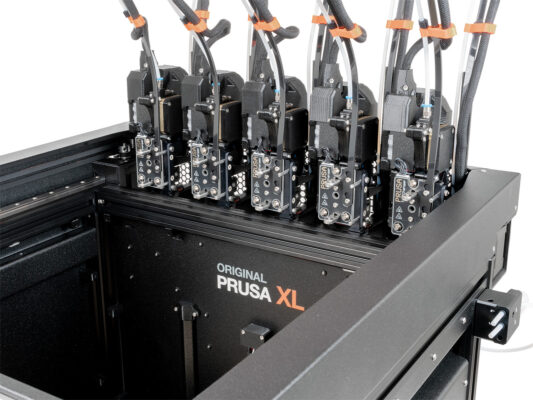


Hello, you can fint the part here: https://www.printables.com/model/449554-xl-printable-parts/files -> go to Files -> Parts for maintenance -> tc_greaser
If you only grease the toolchanger side, the grease will go mostly on the first tool head. By the time the 5th tool head is reached, there will be almost no more grease to be applied anymore.